
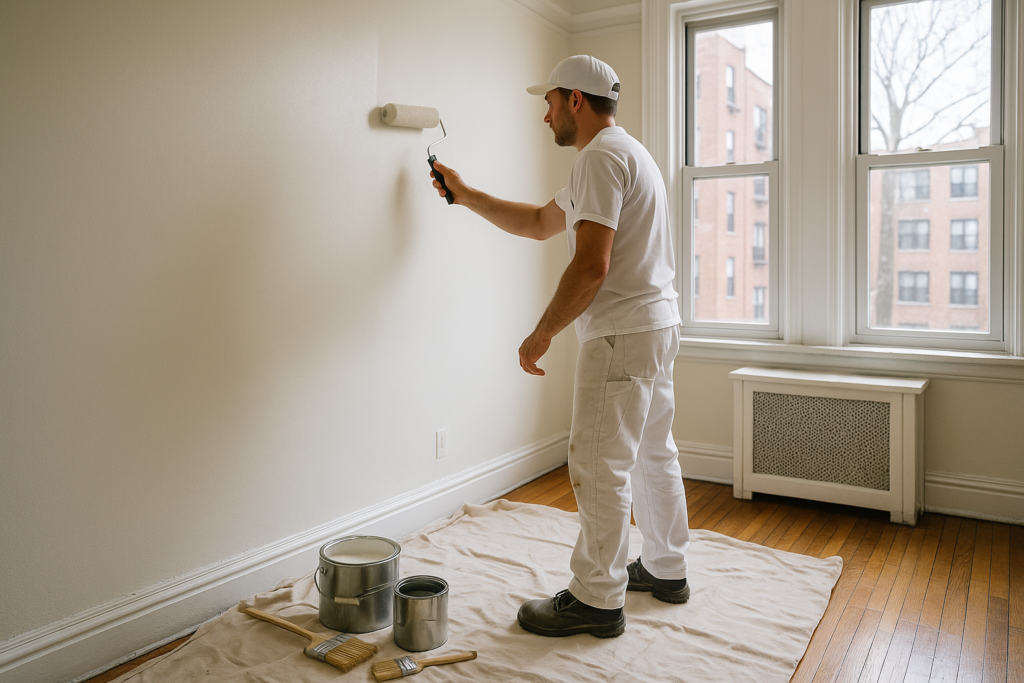
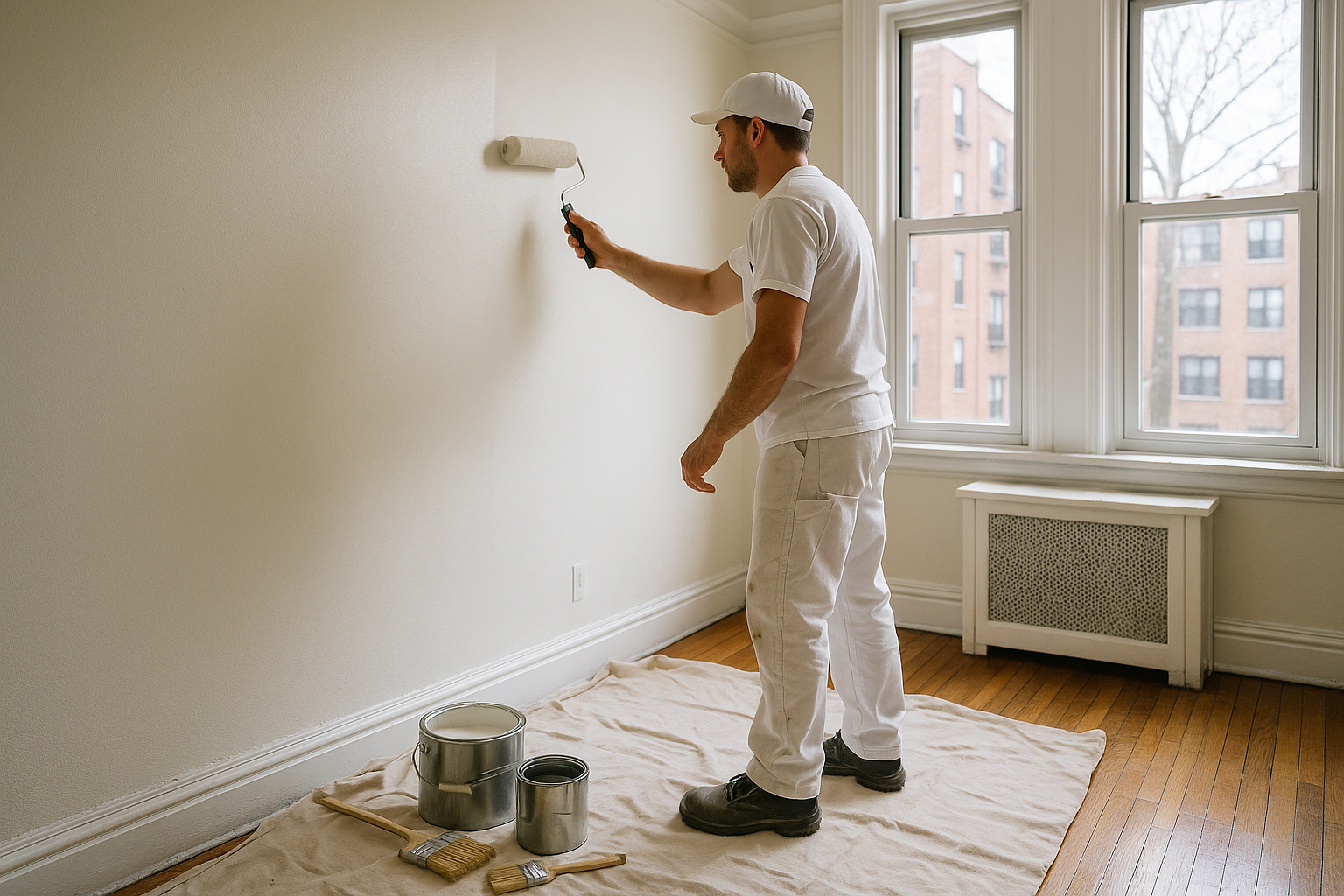
Honest Home Company Our Services Guide: 2026 Guide for Queens Residents
Queens is one of the most structurally diverse boroughs in New York City Victorian wood-frames in Richmond Hill sit two blocks from 1960s brick co-ops in Forest Hills, and Astoria has pre-war apartment buildings that haven’t seen fresh paint since the Bloomberg administration. When homeowners and building managers in this borough reach out to us about home company our services, the conversation almost always starts with a misconception. Not because people aren’t smart Queens residents are some of the most research-savvy clients we work with but because painting looks simple from the outside. You see rollers and color swatches. You don’t see the four hours of prep work that happens before a single drop of paint touches the wall.
We want to set the record straight. Not to sell you on anything, but because a client who understands what the job actually involves makes better decisions, gets a better result, and doesn’t feel blindsided when the crew shows up with a floor sander instead of a paintbrush.
The Paint Itself Is Maybe 20% of the Job
The most common thing we hear from new clients particularly in neighborhoods like Jackson Heights or Woodside where a lot of homeowners are tackling their first major renovation is some version of: “I just need the walls painted, how complicated can it be?” The paint is the easy part. What takes time is everything that comes before it.
A proper paint job on a pre-war apartment in Sunnyside starts with a full surface assessment. We’re checking for cracking plaster, water stains, lead paint (a real concern in any Queens building constructed before 1978), efflorescence on exterior masonry, and whether the existing surface has been painted with oil or latex because priming over an oil-based paint with latex without the right preparation will cause peeling within a season. Then comes sanding, patching, caulking around window frames and trim, and in many cases a coat or two of primer. On a typical two-bedroom apartment in Forest Hills, that prep phase runs six to ten hours before we ever open a finish coat.
This is why the national average cost for interior painting which HomeAdvisor’s 2024 True Cost Report puts between $967 and $3,092 for a standard home run 20 to 40 percent higher in New York City. It’s not pure labor inflation. It’s access logistics, elevator reservations, building superintendent coordination, lead-safe work practice compliance, and prep complexity that comes with older housing stock.
One Coat Is Almost Never Enough and Here’s Why That Matters
We get this one a lot in Long Island City, where a wave of loft conversions and condo flips over the past decade created a generation of landlords who want things done fast. The assumption is that if the paint is high quality, one coat covers everything and you’re done. Sometimes that’s true on a freshly primed, perfectly smooth surface with a full-coverage formula. But on a wall, that’s going from deep charcoal to soft white, or on a surface with uneven texture from years of patching, one coat leaves you with a finish that looks fine in dim light and terrible in daylight.
Two coats of finish paint are standard in our work, and three aren’t unusual on accent walls, ceilings with previous water damage, or exteriors with significant weathering. The Paint Quality Institute has documented that high-quality exterior paint jobs last 10 to 15 years when properly applied including adequate coats and preparation compared to three to five years for rushed applications with budget materials. That gap represents real money for any Queens homeowner who is maintaining a property for the long term.
Color Selection Takes Longer Than People Expect and That’s Fine
A client in Bayside called us last fall after a previous painter had already completed a full repaint of her living and dining rooms. The color looked perfect on the swatch, wrong on the wall, and she couldn’t figure out why. The answer was light. Paint color is almost entirely a product of how light interacts with a surface, and a room that faces north in a Bayside colonial reads color completely differently than a south-facing room in a Ridgewood row house at the same time of day. We now build color consultation time into every estimate, and we always recommend testing a painted swatch directly on the wall and living with it for 48 hours across different lighting conditions before committing.
Some homeowners also assume that once they hand us a Benjamin Moore or Sherwin-Williams color code, our job is mechanical. In reality, sheen selection flat, eggshell, satin, semi-gloss has as much impact on the final look as the color itself. High gloss on an old plaster wall in Flushing will highlight every imperfection. Flat paint in a kitchen near the stove is a maintenance problem waiting to happen. These are the kinds of practical calls we make based on field experience, not color theory.
Faster Isn’t Better and a Low Bid Often Signals a Shorter Process
We’re a home company whose services are built around quality over volume, and we say that knowing it costs us some jobs. Queens is a competitive market. There are always painters willing to show up and knock out a three-bedroom in two days for a price that sounds almost too good. Sometimes those jobs turn out fine. More often, we hear from the same homeowners six months later when the paint is peeling off the bathroom ceiling or bubbling around a window frame that wasn’t properly caulked.
Speed and quality aren’t always opposites an experienced crew works efficiently. But there’s a floor below which the timeline just doesn’t support doing the job right. A full exterior repaint on a two-story wood-frame in Middle Village, done correctly, takes three to five days depending on surface condition. A quote that promises two days should prompt questions about what’s being skipped.
This is also why verifying contractor credentials matters. New York City’s Department of Buildings requires that contractors working on buildings with six or more units hold appropriate licenses and carry general liability insurance of at least $1 million per occurrence. We carry that coverage on every job, and we’re happy to show the certificate before work begins. That documentation protects the homeowner and the building not just the contractor.
Indoor Air Quality Isn’t a Marketing Buzzword
Queens has some of the highest asthma rates in New York State, concentrated in neighborhoods like South Jamaica and Corona. When we recommend low-VOC or zero-VOC paint to a client, it’s not a premium upsell it’s a practical recommendation. The EPA notes that volatile organic compounds in conventional paints are a leading contributor to indoor air pollution, and off gassing can continue for days after application in a space with limited ventilation. In a tight Queens apartment where windows face a courtyard or a narrow alley, that matters.
Zero-VOC formulas have improved significantly in the past few years. The performance gap between them and traditional paints has essentially closed for interior applications. We use them as a default on jobs involving children’s rooms, bedrooms, and any enclosed space with limited airflow. If a client wants to know exactly what we’re applying and why, we can walk through the spec sheet before we start.
Get an Honest Estimate Before the Work Begins
If you’re planning an interior or exterior paint project anywhere in Queens whether it’s a single room in Astoria, a full house in Howard Beach, or a multi-unit building in Jamaica we’d rather give you a clear, detailed estimate upfront than have you discover surprises mid-project. At Masterpiece Painting Services, our estimates include surface condition notes, product recommendations, coat count, and timeline. No vague line items. Reach out to us directly to schedule a free on-site consultation and get a straight answer about what your project actually involves.
Frequently Asked Questions
How long does a typical interior painting project take for a Queens apartment?
For a standard two-bedroom apartment in Queens, plan on two to three full working days when done properly this includes prep, priming where needed, and two coats of finish paint. Older buildings in neighborhoods like Sunnyside or Flushing may require additional time if plaster repair or lead-safe work practices are involved. We give every client a realistic timeline in writing before we start.
Do I need to move all my furniture out before your crew arrives?
You don’t need to clear the space entirely, but we do ask that rooms be reasonably accessible and that fragile or irreplaceable items be moved to a safe area. Our crew handles furniture protection with drop cloths and will move larger pieces as needed this is standard in how our home company services are structured for residential clients throughout Queens and the surrounding boroughs.
How do I know if my older Queens home has lead paint that needs special handling?
Any home or apartment building constructed before 1978 has a reasonable probability of containing lead-based paint, and this is common across much of Queens’ older housing stock in neighborhoods like Ridgewood, Woodside, and Richmond Hill. We perform a surface assessment during our estimate and follow EPA Renovation, Repair, and Painting (RRP) guidelines on any project where lead paint is a factor. We can also refer you to a certified lead inspector if a full assessment is needed before work begins.
Related from Masterpiece Painting NYC: Masterpiece Painting in Brooklyn, NY — Where Every Surface Tells a Sto · Home Our Painting Services in Brooklyn, NY — Masterpiece Painting NYC