
Essential Apartment Painting Services Brooklyn NY: 2026 Guide for Harlem, Manhattan Residents
Most people wait too long. They notice something off about a wall a crack, a smell, a patch that keeps coming back and they tell themselves it’s cosmetic, it can wait, it’s not that serious. We’ve walked into apartments across Harlem and West 125th Street corridor where that thinking cost residents’ real money and, in some cases, created genuine health exposure. If you’re considering apartment painting services Brooklyn NY or anywhere across the five boroughs, the smarter question isn’t “does this look bad?” It’s “what is this wall actually telling me?” Here’s how to read it.
We work on pre-war walk-ups off Malcolm X Boulevard, co-ops near Strivers’ Row, and newly converted loft units throughout Central Harlem and we see the same warning signs repeat themselves. The building stock in this part of Manhattan is old, beautiful, and demanding. Paint doesn’t just peel here because nobody got around to repainting. It peels because something underneath is failing.
Warning Signs Your Apartment Walls Need Professional Attention Now
Each sign below falls into one of two categories: Call a pro now or Keep an eye on it. We’re being direct about this because some of these signals are genuinely time-sensitive, and a few carry safety implications that go beyond aesthetics.
1. Paint Bubbling Up from the Surface in Raised Blisters
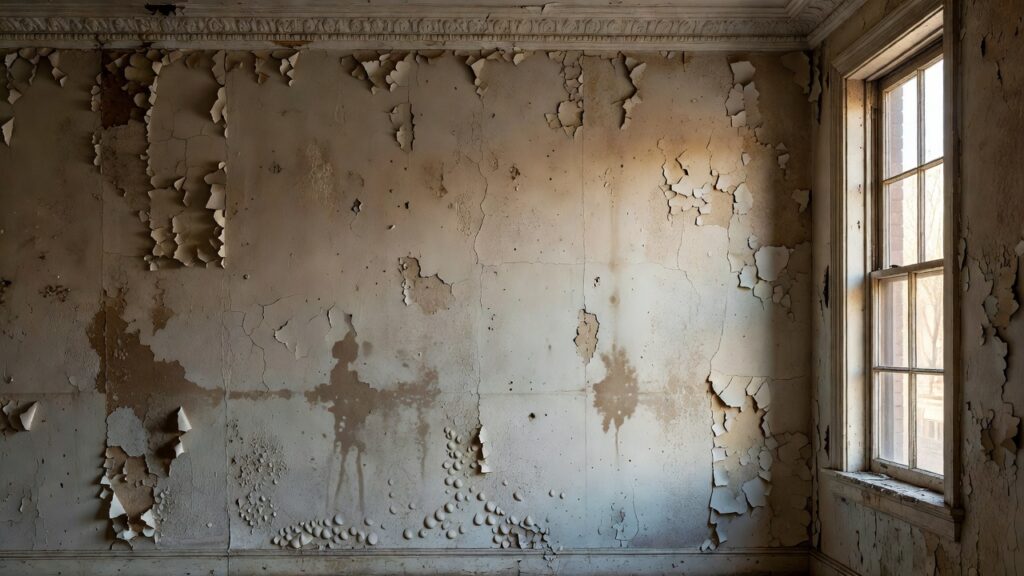
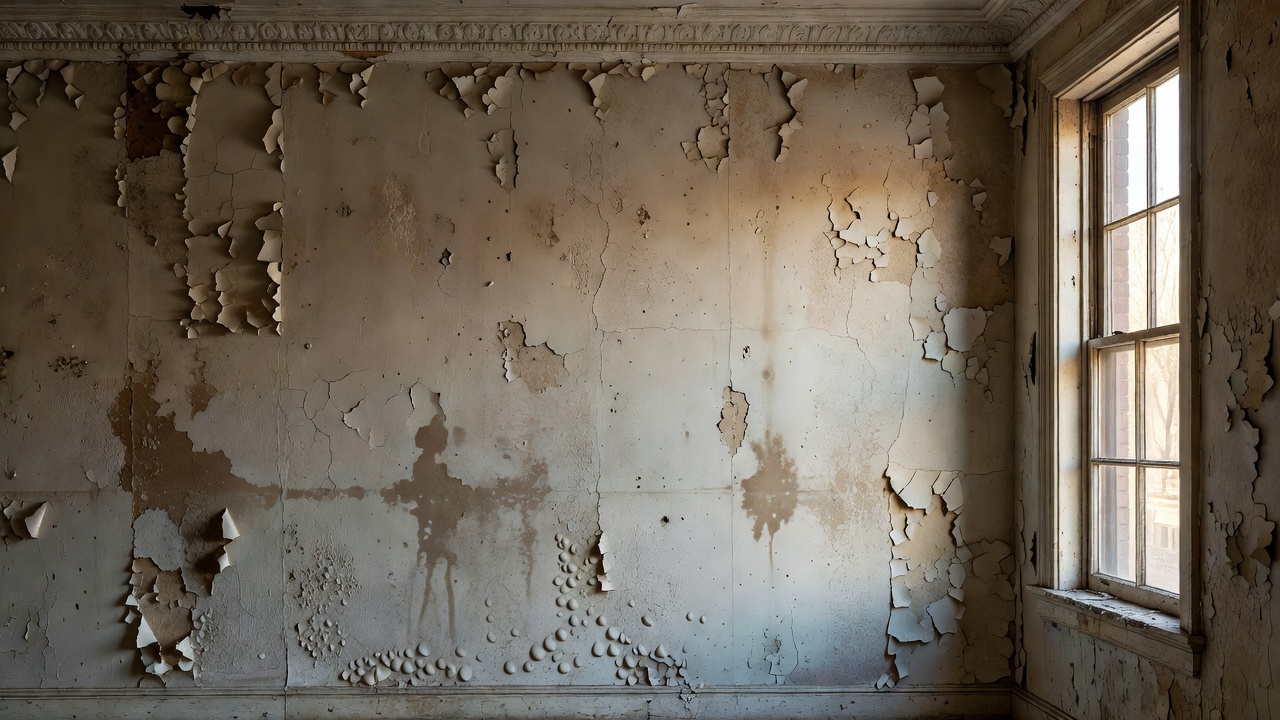
If you press one of those bubbles and moisture comes out, or the blister is soft and warm, you have an active water intrusion problem. Blistering paint on an interior wall often means a pipe is sweating or leaking behind the drywall, or that exterior moisture is driving through the masonry both common in Harlem’s older limestone and brick buildings. The paint is the last thing failing here; the first thing was your building envelope or plumbing.
Call a pro now. Don’t repaint over it. Water behind a wall in a pre-war building creates mold conditions within 24 to 72 hours. The EPA notes that volatile organic compounds and biological contaminants in poorly maintained interior spaces are among the leading causes of indoor air quality problems and active moisture is the primary driver of both.
2. A Persistent Musty or Chemical Smell Coming from the Walls
Your nose is more reliable than most diagnostic tools. A musty odor that doesn’t go away after airing out a room especially in older apartments near 116th Street or buildings that haven’t been professionally painted in over a decade often indicates mold or mildew colonizing behind the painted surface. A sharp chemical smell in a recently painted apartment may indicate that the previous contractor used high-VOC coatings in an enclosed space without proper ventilation.
Call a pro now. The Environmental Protection Agency notes that VOCs from conventional paints are a leading source of indoor air pollution, a serious concern for families in dense residential buildings. If you’re smelling chemistry in a room nobody’s worked in recently, that’s residual off-gassing from a product that shouldn’t have been used indoors without proper precautions.
3. Chalky Powder on Exterior-Facing Walls or Windowsills
Run your finger along a wall that faces outside. If you come away with a chalky white or gray residue, the paint has begun to oxidize and break down at the molecular level. In Harlem apartments with single-pane windows and older masonry, this happens faster than most people realize. Chalking means the paint film is no longer providing a protective barrier moisture, allergens, and particulates are now passing through more freely.
Keep a close eye on it, but don’t wait more than one season. Left alone, this progresses to cracking and spalling, at which point you’re dealing with substrate damage, not just surface wear.
4. Horizontal or Diagonal Cracks Near Window and Door Frames
Hairline cracks that run vertically with the seam of drywall are usually settling annoying, but low urgency. Diagonal cracks radiating from the corners of window or door frames are different. In Manhattan pre-war construction, these patterns often indicate differential foundation movement or lintel stress. The paint crack is the visible tip of a structural conversation happening underneath.
Call a pro now and not just a painter. We always tell clients in buildings like the ones along Edgecombe Avenue or St. Nicholas Place to have a structural engineer look at diagonal cracking before we go anywhere near it with primer. Painting over a crack that’s moving is a waste of everyone’s money.
5. Yellow or Brown Staining That Keeps Reappearing After You Paint Over It
You painted over it once. It came back. You painted over it again. It’s back. This bleed-through is almost always the result of either water staining from above (a leak from the unit upstairs is common in Harlem’s older six-story walk-ups), or nicotine and heavy residue from decades of smoking soaked into the substrate. Neither problem is solved with another coat of flat white. Without proper sealing and source remediation, the stain will return no matter how many coats go on top.
Call a pro now. Recurring stains mean the source hasn’t been addressed. A professional crew will identify it, seal it correctly typically with a shellac-based or oil-based primer and give you a result that actually holds.
6. Peeling Paint in Pre-1978 Buildings
This one carries a legal dimension in New York City. Buildings constructed before 1978 may contain lead-based paint, and peeling or chipping paint in those units triggers Local Law 1 obligations for building owners. If you’re in a Harlem apartment built before the late 1970s and you’re seeing peeling especially on window trim, door frames, or radiator covers this is not a paint problem. This is a lead safety issue.
Call a pro now and verify credentials. New York City’s Department of Buildings requires that contractors performing work on buildings with six or more units hold appropriate licenses and carry general liability insurance of at least $1 million per occurrence. Any painter you hire for lead-affected work should also hold EPA RRP certification. Ask before they pick up a brush.
7. Uneven Sheen or Flat Patches Appearing on Glossy Walls
This one looks like a minor cosmetic issue. It often isn’t. When sections of a previously uniform finish start showing dull, flat patches sometimes called “flashing” it’s usually because moisture vapor is transmitting unevenly through the wall, or because the underlying surface wasn’t properly prepared during the last paint job. In a bathroom or kitchen, this can indicate early-stage tile grout failure allowing steam intrusion into the wall cavity.
Keep an eye on it for one month. If the flashing spreads or you notice accompanying softness in the drywall, escalate immediately.
8. Paint Separating Along Crown Molding or Baseboards
A gap forming between paint and trim especially along original plaster crown molding in older Harlem apartments tells you the building is moving and the caulk or paint film can no longer bridge the gap. In winter, this gap lets cold air in and creates a condensation point. That condensation feeds the exact moisture cycle that leads to signs 1, 3, and 5 above.
Keep an eye on it through one full seasonal cycle. If it’s consistent and widening, we’d want to address it before the next heating season.
What “Apartment Painting Services Brooklyn NY” Actually Means for Harlem Renters and Owners
We know the phrase apartment painting services Brooklyn NY might read as odd when you’re standing in Harlem, Manhattan. But our crews cross every borough, and the underlying work reading walls, diagnosing what’s underneath them, and doing the job correctly the first time is identical whether we’re in DUMBO, Bay Ridge, or Central Harlem. According to HomeAdvisor’s 2024 True Cost Report, interior painting in New York City typically runs 20 to 40 percent above the national average due to labor costs and building access logistics. That premium is real, and it’s exactly why cutting corners with an unlicensed contractor costs you more over time.
The Paint Quality Institute reports that high-quality paint jobs on residential interiors can last a decade or more when properly applied compared to three to five years for lower-grade work. In a Harlem apartment where access is difficult and prep time is compressed, doing it right once is always cheaper than doing it twice.
Ready to Get a Professional Assessment?
If two or more of the warning signs above describe what you’re seeing in your apartment right now, don’t wait until the next lease renewal to deal with it. Our team at Masterpiece Painting Services offers free on-site estimates throughout Harlem, Manhattan, Brooklyn, and the surrounding boroughs. We’ll tell you honestly what the wall is showing us, what needs to happen first, and what we’d do differently from the last crew that was in there. Give us a call or reach out through our website the assessment costs you nothing, and the information is worth having.
Frequently Asked Questions
How do I know if peeling paint in my Harlem apartment is a lead hazard?
Any apartment in a building constructed before 1978 should be treated as potentially containing lead-based paint, especially on trim, window sills, and doors. If the paint is peeling or chipping, New York City Local Law 1 places legal obligations on your building owner to address it. A licensed contractor with EPA RRP certification can test and remediate safely ask any painter for their credentials before work begins.
We need apartment painting services in Brooklyn NY — can you also serve Manhattan locations like Harlem?
Yes. Our crews at Masterpiece Painting Services work across all five boroughs, including Central Harlem, Hamilton Heights, and Inwood in upper Manhattan, as well as Brooklyn neighborhoods from Park Slope to Bay Ridge. We bring the same surface preparation standards and licensed teams to every project regardless of borough. Contact us for a free estimate at your location.
How long does a professional apartment repaint typically take in a Harlem pre-war building?
A standard one- to two-bedroom apartment with intact surfaces runs two to three days for prep, priming, and two finish coats. Pre-war buildings with original plaster walls, complex crown molding, or lead paint considerations can add another day or two. We always walk the space before quoting a timeline so there are no surprises mid-project.
Related from Masterpiece Painting NYC: Home Our Painting Services in Brooklyn, NY — Masterpiece Painting NYC