
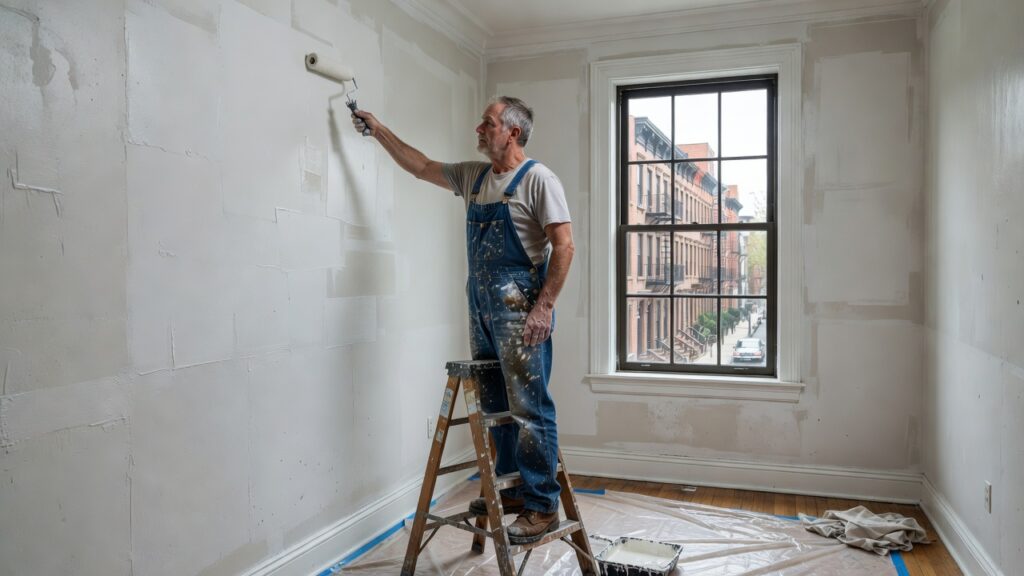
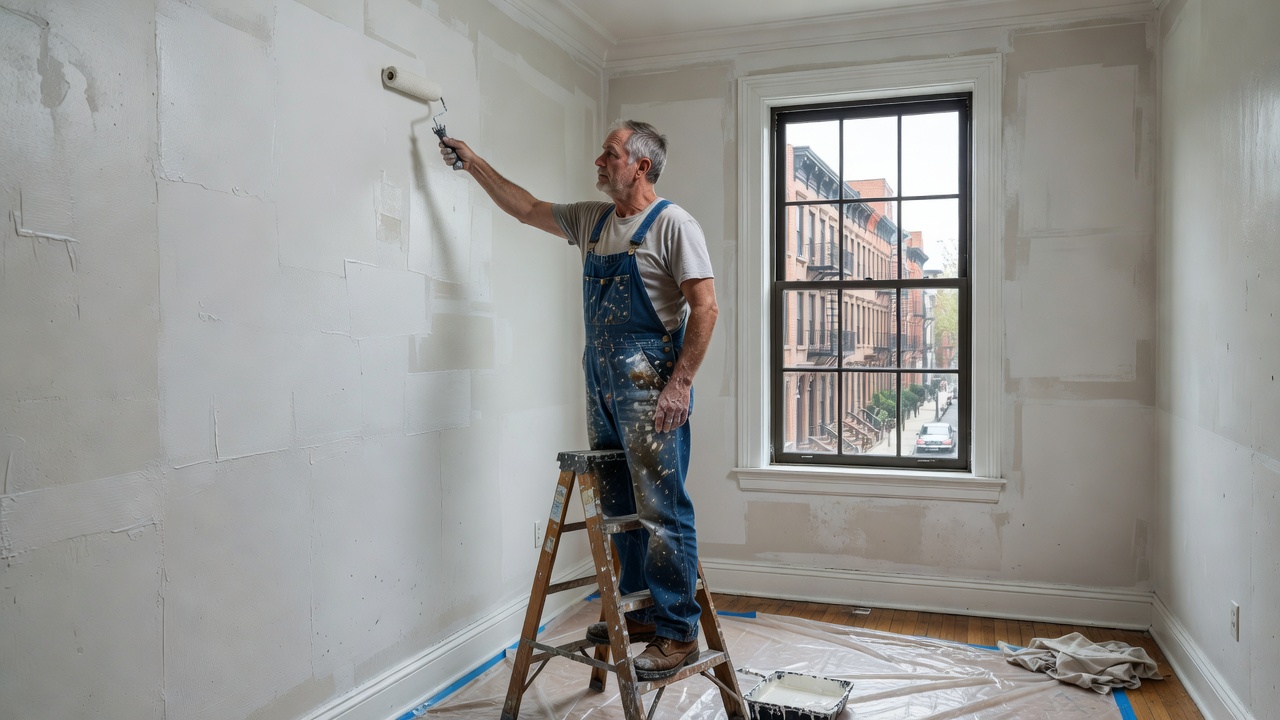
Trusted Masterpiece Painting Services: 2026 Guide for New York Residents
Most paint jobs that fail do not fail because of bad luck. They fail because of decisions made before a single brush touched the wall and in a city as demanding as New York, those mistakes tend to show up faster and cost more to fix than they would anywhere else. At Masterpiece Painting Services, we work across all five boroughs, and the same preventable problems appear on job sites from Bay Ridge townhouses to Harlem co-ops to pre-war walk-ups in Astoria. This post walks through the most common ones: the symptoms, the real cause, and what a proper fix actually looks like.
Skipping Surface Prep and Wondering Why the Paint Peels
Symptoms: Paint bubbles or lifts within the first year. Edges peel back near window frames and baseboards. In bathrooms and kitchens, whole sections pull away like tape.
What actually caused it: The surface was not clean, dry, or stable before paint went on. In New York City apartments specifically especially older buildings in neighborhoods like Carroll Gardens or Washington Heights walls often carry decades of grime, grease migration from neighboring units, and hairline cracks patched with mismatched compound. Paint applied over any of that will not bond. Full stop.
The professional fix: We wash walls with a TSP substitute, allow full drying time, and skim-coat any unstable areas before priming. Primer is not optional; it is the adhesion layer everything else depends on. On plaster walls common in pre-war Brooklyn and Manhattan buildings, we use a high-solids bonding primer, not the cheap latex stuff that gets rolled on in 20 minutes.
Can this be prevented? Yes, entirely. Never let a contractor skip the walk-through where prep is discussed in detail. If prep is not itemized in the quote, ask why.
Choosing Paint Based on Price Per Gallon Rather Than Where It Goes
Symptoms: Living room walls look fine at first, but scuff marks appear within weeks. Bathroom paint starts showing mildew halos within months. High-traffic hallways look worn before the lease is even up.
What actually caused it: The wrong sheen or formulation was used for the space. Flat paint in a hallway, eggshell in a steam bathroom, or bargain-grade exterior paint on a south-facing facade these all lead to the same outcome. The Paint Quality Institute reports that high-quality exterior paint can last 10 to 15 years when properly applied, compared to just 3 to 5 years for lower-grade products. That gap applies to interior work too.
The professional fix: Paint selection has to match the surface conditions, traffic level, and moisture exposure. We use satin or semi-gloss in kitchens and bathrooms, low-sheen formulas in bedrooms, and high-hide paints in rooms with color transitions. For New York City buildings with radiator heat which dries out air and causes walls to expand and contract seasonally we prefer flexible acrylic formulas that move with the substrate rather than cracking away from it.
Can this be prevented? Ask your painter to specify the brand, line, and sheen for each room before work begins. A confident professional will answer without hesitation.
Ignoring Lead Paint Protocols in Pre-1978 Buildings
Symptoms: You notice fine dust everywhere after prep work. Kids or pets are in the home during a renovation. No plastic sheeting was used. The contractor’s crew is sanding without respirators.
What actually caused it: The building predates the 1978 federal ban on residential lead paint — which includes the vast majority of housing stock in neighborhoods like Bed-Stuy, Flatbush, Inwood, and much of the Upper West Side. The EPA requires contractors working on pre-1978 housing to be Renovation, Repair, and Painting (RRP) certified. Skipping this is not a minor oversight; it is a regulatory violation and a genuine health risk, particularly for children under six.
The professional fix: Test before you touch anything. We use EPA-recognized test kits or send samples to a certified lab when the building history is uncertain. Containment, HEPA vacuuming, and proper waste disposal are non-negotiable on any job where lead paint is confirmed. The EPA notes that VOCs and lead dust from conventional renovation work are among the leading sources of indoor air pollution — a priority we take seriously on every New York job site.
Can this be prevented? Verify that your contractor holds EPA RRP certification before signing any contract for work in buildings built before 1978. Ask to see the certificate.
Painting in the Wrong Conditions and Blaming the Paint
Symptoms: Exterior paint looks streaky and uneven after drying. Interior walls show lap marks or roller texture that won’t flatten out. The paint takes days to dry and never fully cures.
What actually caused it: Temperature and humidity were outside acceptable ranges during application. In New York, this is a year-round issue. Summer humidity in Queens and Brooklyn can push past 80 percent, which slows drying and causes water-based paint to sag. Winter interior work in buildings with the heat cranked too high causes fast, uneven drying that leaves visible lap marks. Fall exterior work done on a surface that dropped below 50 degrees overnight will fail at the film-forming stage.
The professional fix: We monitor conditions before and during application. On exterior work, we schedule around the forecast, not just the calendar. For interior jobs in New York City apartment buildings — where HVAC is often controlled by building management, not the tenant — we use fans and dehumidifiers to create stable conditions and communicate with building super staff when necessary.
Can this be prevented? Ask your painter what temperature and humidity range they work within. If they don’t have a clear answer, that tells you something.
Hiring Unlicensed Contractors to Save Money Upfront
Symptoms: Work is done fast, looks decent on day one, then problems emerge over 90 days. No warranty is honored. The company can’t be reached. Building management cites code issues.
What actually caused it: The contractor was not properly licensed or insured, and there was no accountability structure. New York City’s Department of Buildings requires contractors working on buildings with six or more units to hold appropriate licenses and carry general liability insurance of at least $1 million per occurrence. Many buildings in DUMBO, Long Island City, and Williamsburg where large multi-family properties are common require proof of insurance before a contractor can even enter the building. According to HomeAdvisor’s 2024 True Cost Report, New York City painting projects typically run 20 to 40 percent above the national average due to labor and access logistics. That premium should be going toward qualified, insured professionals not cut-rate work that costs more to fix later.
The professional fix: There is no shortcut fix here. Verify credentials before work starts. Request a certificate of insurance naming the building owner as additional insured. Check the contractor’s NYC DOB registration. These are routine requests that any legitimate company will fulfill without pushback.
Can this be prevented? Always. Vetting credentials takes 15 minutes and can save you thousands in liability and rework costs.
Not Having a Written Scope of Work
Symptoms: Painter “forgets” to do the closets. Second coat never happens. Trim is a different color than agreed. You have no documentation to reference in a dispute.
What actually caused it: The agreement was verbal, or the written estimate was too vague just a number on a page with no breakdown. This is especially common on small apartment jobs in Manhattan and Brooklyn where the rush to get work done before a lease starts creates pressure to skip formalities.
The professional fix: Before any work begins, the scope should specify every room and surface, the number of coats, the prep steps included, the exact paint products, and who is responsible for moving furniture and patching holes. A Zillow study found that freshly painted homes with neutral, contemporary palettes sell for up to 5 percent more and spend fewer days on the market but that return only materializes when the work is done right and completely.
Can this be prevented? Completely. Demand a written, itemized scope before you sign. A contractor who resists putting things in writing is showing you something important about how they operate.
Ready to Get It Right the First Time?
If any of the problems above sound familiar or if you want to make sure they never do we are ready to help. Masterpiece Painting Services serves homeowners, landlords, and building managers across Brooklyn, Manhattan, Queens, and beyond. We offer free estimates, written scopes of work, fully licensed and insured crews, and the kind of prep work that makes paint jobs last. Reach out to us at masterpiecepaintingnyc.com to schedule your consultation.
Frequently Asked Questions
How do I know if Masterpiece Painting Services can work in my New York City co-op or condo building?
Most co-op and condo boards in New York City require contractors to submit proof of liability insurance and a certificate naming the building as additional insured before work begins. Our team is fully licensed and insured, and we handle the building approval paperwork routinely. If your board or managing agent has specific requirements, let us know and we will coordinate directly with them before scheduling.
What is the best time of year to schedule exterior painting in New York?
In New York, the reliable window for exterior painting runs from late April through early October, when temperatures stay consistently above 50 degrees Fahrenheit and humidity is manageable. Late spring and early fall are our preferred scheduling windows because the heat of July and August can cause water-based paint to dry too quickly on hot masonry surfaces. We monitor forecasts closely and will never rush an exterior job into unsuitable conditions.
How long should a professional interior paint job last in a New York City apartment?
A properly prepared and painted interior in a New York City apartment should hold up well for five to eight years under normal living conditions, and longer in low-traffic rooms. The biggest variable is prep quality surfaces that were cleaned, primed, and skim-coated before painting will outlast surfaces that were not by several years. We put this in writing in every scope of work so you know exactly what you are getting.
Related from Masterpiece Painting NYC: Home Our Painting Services in Brooklyn, NY — Masterpiece Painting NYC · At Masterpiece Painting NYC – Brooklyn’s Full-Service Painting Contrac · Trusted Masterpiece Painting Services New York