
Published November 4, 2026
Exterior Painting Brownstone Brooklyn NY: What the Job Actually Involves From Start to Finish
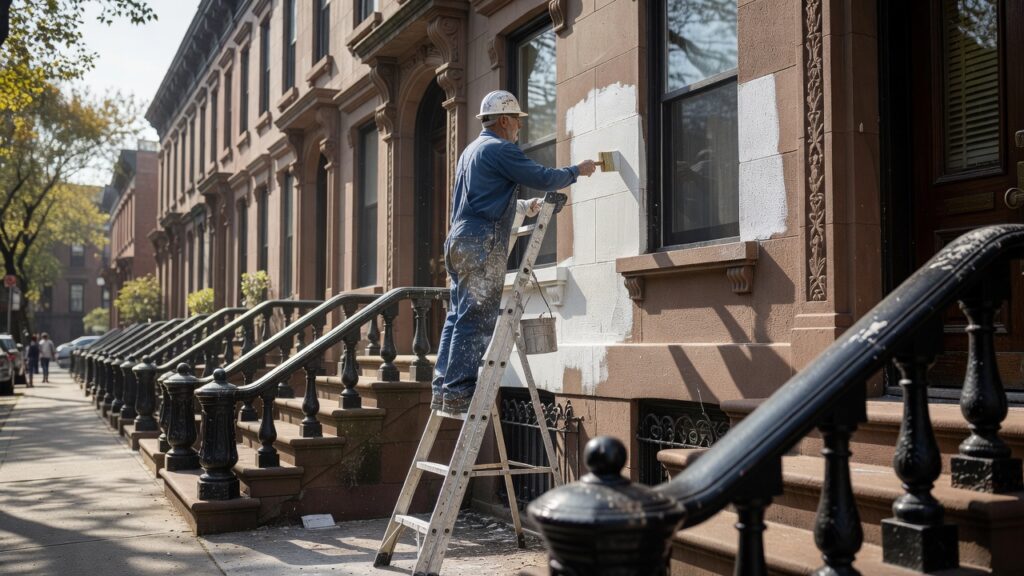
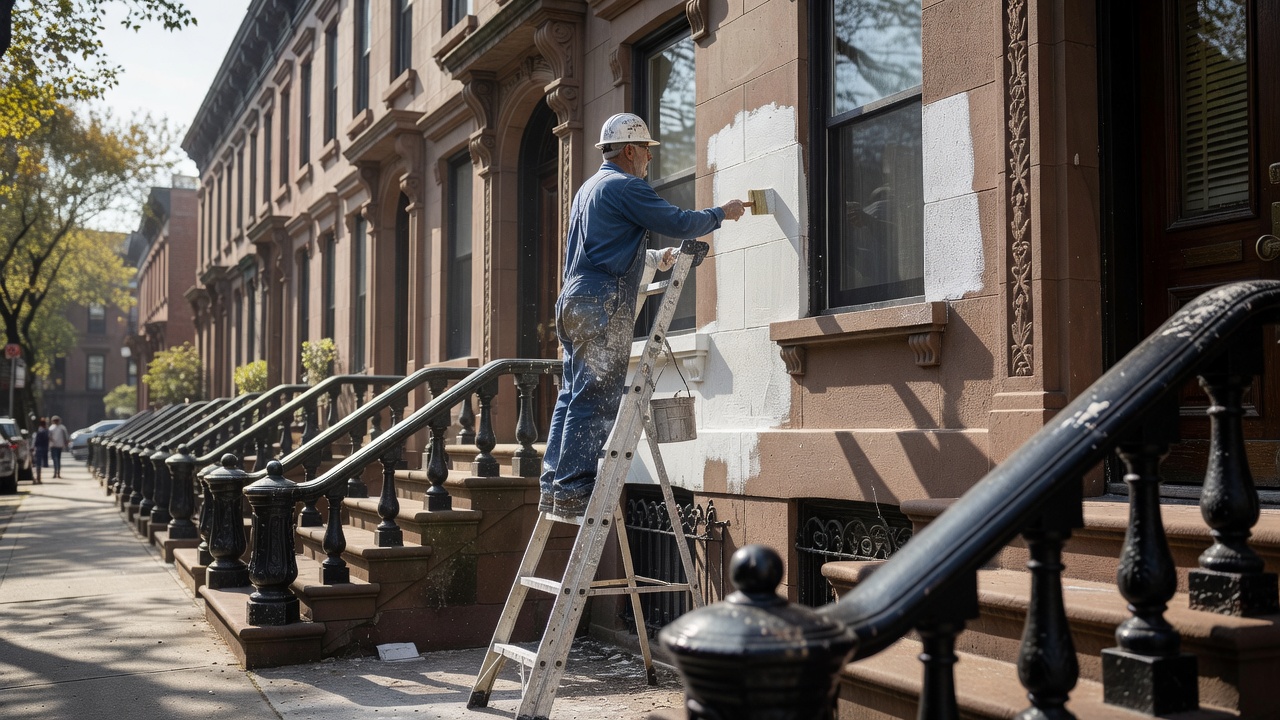
Planning exterior painting on a Brooklyn brownstone requires more than choosing a color and hiring a crew. Older brownstone facades may have deteriorating sandstone, damaged mortar, layers of previous paint, or moisture problems that need attention before any new coating is applied.
The first step is understanding what the exterior is made of and whether painting is actually the right solution. Brownstone sandstone, brick, wood trim, and decorative ironwork each require different preparation and maintenance methods. Applying the wrong coating or using aggressive cleaning methods can damage historic materials.
This guide explains what Brooklyn brownstone owners should consider before starting an exterior painting or restoration project, from the initial inspection to the final review.
Before You Start: Check the Building’s Condition and Historic Status
Before scheduling work, find out whether your property is in a designated New York City historic district or is an individual landmark.
Neighborhoods such as Park Slope, Carroll Gardens, Cobble Hill, and Bedford-Stuyvesant contain designated historic districts. However, not every building in these neighborhoods has the same designation or restrictions.
The NYC Landmarks Preservation Commission (LPC) generally requires approval for many exterior alterations to designated properties. Ordinary maintenance, including repainting an exterior to match its existing color, does not normally require an LPC permit. A noticeable color change may require approval. The type of proposed coating and the original condition of the facade can also affect the review.
You should also determine whether the proposed work requires a Department of Buildings filing or other approvals. Ordinary painting generally does not require a DOB work permit, but more extensive facade repairs or alterations may have additional requirements. Contractors performing covered home improvement work may also need a New York City Department of Consumer and Worker Protection license.
Before work begins, inspect the facade from a safe location. Look for:
-
Peeling or blistering paint
-
White deposits that may indicate efflorescence
-
Cracked or deteriorating mortar joints
-
Spalling or flaking sandstone
-
Loose decorative details
-
Water stains around windows and roof edges
-
Rusting ironwork and deteriorated metal fixtures
Do not climb onto an unstable ladder or roof to inspect these areas yourself. A qualified contractor or preservation professional can assess surfaces that are difficult to reach.
Step 1: Identify the Masonry Before Cleaning
Not every brownstone facade should be treated like an ordinary painted wall.
Traditional brownstone buildings commonly feature brown sandstone facing, sometimes combined with brick and other materials. Sandstone is relatively soft and can deteriorate when exposed to unsuitable cleaning methods, moisture, and incompatible coatings.
Before cleaning, determine whether the surface is natural brownstone, painted brick, stucco, or another material. Also identify any existing coatings and previous repairs.
This matters because painting natural brownstone is generally not recommended as a preservation treatment. Paint can restrict moisture movement and contribute to deterioration, even when marketed as a breathable coating. If the sandstone is damaged, applying another layer of paint will not correct the underlying condition.
For painted brick, stucco, wood trim, or previously coated architectural elements, a suitable cleaning and repainting system may be appropriate after an inspection.
Step 2: Clean the Exterior Carefully
Cleaning removes surface dirt, loose deposits, and other contaminants that may interfere with repairs or an appropriate coating.
The cleaning method should match the material and its condition. High-pressure water blasting, sandblasting, and other aggressive techniques can damage soft brownstone and remove material from the facade.
A professional may recommend a controlled, low-pressure cleaning method or another masonry-safe treatment after evaluating the surface. The choice depends on the material, the type of dirt or staining, and the condition of the existing finish.
Efflorescence also needs attention. These white deposits form when moisture moves through masonry and leaves soluble salts behind as it evaporates. Simply washing or painting over them will not resolve the underlying moisture problem.
The source of water entry should be investigated before cleaning and coating work proceeds. The facade must also dry sufficiently before any compatible repair material or coating is applied.
Step 3: Repair the Masonry Before Applying a Coating
Surface repairs are an important part of preparing a brownstone for maintenance or repainting.
Look for:
-
Spalling sandstone: Flaking or separating stone may require specialized repair or replacement.
-
Damaged mortar joints: Cracked or deteriorated mortar may need appropriate repointing.
-
Cracked architectural details: Window surrounds, cornices, and decorative features may need specialist attention.
-
Water infiltration: Leaks from roof edges, parapets, windows, or other openings should be corrected.
-
Failed previous repairs: Incompatible patching materials or coatings may need to be evaluated before additional work.
Repairs should be compatible with the original masonry. Using an unsuitable patching compound or hard cement-based material on softer historic sandstone can cause additional damage.
For original brownstone features, consider consulting a masonry restoration specialist with experience in historic sandstone. A general painting contractor may not have the expertise needed for substantial stone restoration.
Painting should only be considered after the substrate has been assessed and the appropriate repair work has been completed.
Step 4: Determine Whether Painting Is Appropriate
This is one of the most important decisions in the project.
If the facade is natural brownstone, preserving and repairing the original stone may be more appropriate than covering it with paint. A coating can conceal deterioration and complicate future restoration.
If the building has previously painted brick, stucco, wood trim, or other suitable surfaces, repainting may be an option. The existing coating must be evaluated for adhesion, compatibility, and moisture-related problems.
A contractor should consider:
-
The type of substrate
-
The condition of the existing finish
-
Whether moisture is entering the wall
-
The coating’s compatibility with the surface
-
The manufacturer’s application requirements
-
Any historic preservation restrictions
For surfaces that are suitable for painting, choose a product designed for that particular material. Do not assume that elastomeric coatings, standard exterior latex, or masonry primers are interchangeable across all surfaces.
A product described as breathable does not automatically make it suitable for historic sandstone.
Step 5: Address Lead Paint and Other Safety Requirements
Older Brooklyn brownstones may have layers of paint applied before the federal residential lead-based paint ban in 1978.
If the property was built before 1978, lead-based paint should be considered a possibility until its presence has been properly assessed. Scraping, sanding, and other preparation methods can release hazardous dust when lead paint is disturbed.
Under the EPA’s Renovation, Repair and Painting (RRP) Rule, paid renovation work that disturbs lead-based paint in covered pre-1978 housing generally requires a certified renovation firm and trained workers using lead-safe work practices. The rule includes thresholds and exemptions, so its applicability depends on the property and the amount and type of work.
Ask the contractor about:
-
EPA RRP firm certification, when required
-
The certified renovator assigned to the project
-
Containment and dust-control procedures
-
Safe handling and disposal of paint debris
-
Cleanup and verification procedures
Do not treat ordinary scraping or sanding as harmless preparation when the existing paint may contain lead.
Step 6: Prepare and Paint Compatible Surfaces
Once the inspection, repairs, and safety requirements are addressed, the contractor can prepare any surfaces that are suitable for repainting.
Different materials need different preparation methods.
Painted brick: Loose or failing coatings should be addressed. The proposed primer and finish must be compatible with the brick and existing coating while allowing the wall to manage moisture appropriately.
Stucco: Cracks and damaged areas should be evaluated and repaired before coating. The finish should be appropriate for the stucco system and its moisture conditions.
Wood trim: Loose paint, deteriorated wood, and failed joints should be addressed. Suitable primer and exterior trim paint can then be selected.
Metal railings: Rust and loose coatings should be removed using an appropriate method. A compatible corrosion-resistant primer and finish should be used.
Application conditions also matter. Air temperature, surface temperature, humidity, rain, and drying time can affect the finished result. The contractor should follow the manufacturer’s instructions rather than relying on a universal temperature range or fixed weather window.
Step 7: Inspect the Completed Work
A final inspection helps identify missed areas and unfinished details.
Review the completed work for:
-
Consistent coverage on approved painted surfaces
-
Properly finished window and door trim
-
Areas where old paint may still be loose
-
Visible cracks or unrepaired masonry defects
-
Properly treated metal surfaces
-
Clean work areas and removal of project debris
-
Any outstanding repairs identified during the initial assessment
For historic properties, confirm that the completed work matches the approved scope and any applicable LPC requirements.
The final review should also identify maintenance concerns that may need attention later, particularly around roof edges, window openings, parapets, and other areas where water can enter the facade.
What Affects the Cost of Exterior Brownstone Work in Brooklyn?
The cost of a brownstone project depends on more than the amount of paint required. Preparation, access, restoration needs, and the condition of the building can significantly affect the scope.
Important cost factors include:
-
Facade size and height: Larger buildings and difficult-to-reach areas may require additional labor and access equipment.
-
Masonry condition: Spalling stone, damaged mortar, and failed previous repairs can increase restoration costs.
-
Existing coatings: Multiple layers of deteriorating paint may require additional preparation and lead-safe procedures.
-
Historic requirements: LPC review or specialized restoration methods may affect planning and scheduling.
-
Additional surfaces: Iron railings, wood trim, doors, and decorative details may require separate preparation and finishes.
-
Water-related repairs: Roof-edge leaks, damaged joints, and other moisture sources may need attention before painting.
A useful estimate should separate painting from masonry restoration, access equipment, lead-safe preparation, and other repair work. This makes it easier to understand what is included and avoid unexpected charges.
Troubleshooting: Why Is Exterior Paint Peeling Within a Year?
Paint that starts bubbling, lifting, or peeling soon after application may indicate a problem with moisture, surface preparation, or product compatibility.
Potential causes include:
-
Water entering through damaged roof edges or parapets
-
Cracked mortar joints or deteriorated masonry
-
Moisture trapped behind an unsuitable coating
-
Painting over a damp surface
-
Poor adhesion to an existing finish
-
Incorrect application conditions
Check areas around window openings, roof edges, parapets, and other exposed parts of the building for signs of water entry.
The right response is to identify the cause before applying another coat. Repainting over an unresolved moisture problem can lead to the same failure again.
For natural brownstone, also consider whether the existing coating itself is contributing to deterioration. Removing or replacing a coating on historic sandstone requires careful assessment to avoid damaging the original surface.
Frequently Asked Questions
How long does exterior painting on a Brooklyn brownstone typically take?
The schedule depends on the size of the building, access requirements, weather, and the condition of the exterior.
A project involving sound, previously painted surfaces may require less preparation than one with deteriorating coatings, damaged mortar, or extensive masonry repairs. Lead-safe work requirements and historic preservation approvals can also affect scheduling.
Ask for a written project schedule that separates inspection, preparation, repairs, drying time, coating application, and final review. Avoid relying on a fixed five-to-ten-day estimate before the facade has been inspected.
Do I need a permit for exterior painting on a Brooklyn brownstone?
Ordinary painting generally does not require a New York City Department of Buildings work permit. However, additional approvals may apply when the project involves more extensive construction or facade alterations.
If your building is an individual landmark or located in an LPC-designated historic district, the proposed work may require review. Repainting to match an existing approved color generally does not require an LPC permit, but a perceptible color change may require approval.
Check the property’s designation and proposed scope with the NYC Landmarks Preservation Commission before starting work. Also confirm whether the contractor needs a NYC Department of Consumer and Worker Protection Home Improvement Contractor license for the services being performed.
What’s the best time of year to work on a brownstone exterior in Brooklyn?
Late spring, summer, and early fall can offer suitable conditions for exterior work, but the right timing depends on the weather and the materials involved.
Temperature, humidity, surface moisture, rain, and overnight conditions can all affect cleaning, repairs, and coating application. Some masonry repair materials and paints have specific temperature and drying requirements.
The contractor should check the product instructions and forecast before scheduling each stage. Historic masonry repairs may also require additional planning beyond the painting schedule.
Plan Your Brooklyn Brownstone Project
Exterior work on a Brooklyn brownstone should begin with an honest assessment of the facade. Some surfaces may be suitable for repainting, while original sandstone may need preservation-focused repairs instead.
Masterpiece Painting Services works with property owners on exterior painting projects. Before scheduling, discuss the building’s materials, existing coatings, preparation requirements, and any necessary masonry repairs.
Visit Masterpiece Painting NYC to discuss your project and request an estimate. Ask for a clear breakdown of the proposed work so you understand which surfaces will be painted, which repairs are included, and whether specialized restoration is needed.
Related from Masterpiece Painting NYC: Professional Exterior House Painting in NYC · Home Our Painting Services in Brooklyn, NY — Masterpiece Painting NYC · At Masterpiece Painting NYC – Brooklyn’s Full-Service Painting Contrac
Areas we serve
Manhattan, NY · Brooklyn, NY · Brooklyn, NY · Brooklyn, NY · The Bronx, NY · Staten Island, NY · Queens, NY