
What Brooklyn Homeowners Get Wrong About Popcorn Ceiling Removal Brooklyn NY: A 2026 Guide for Brooklyn Residents
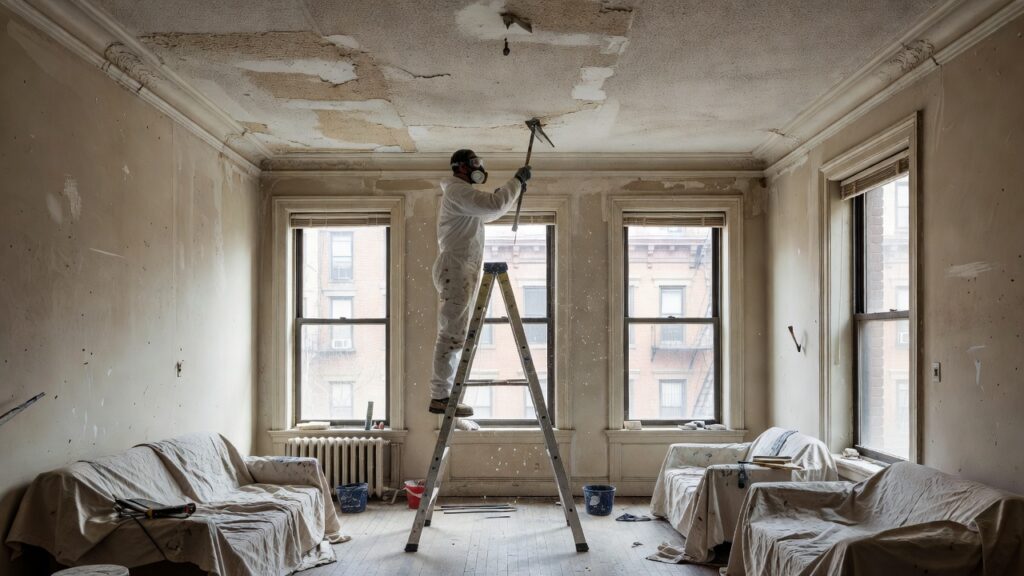
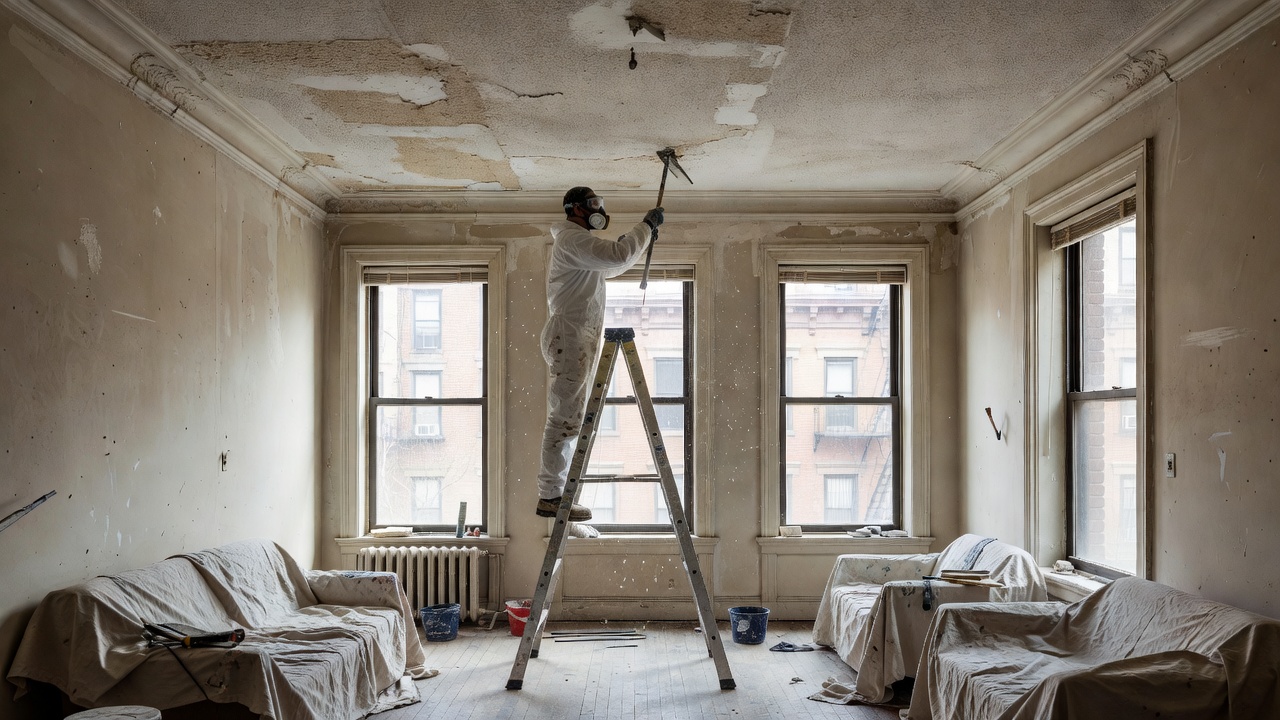
Most people think popcorn ceiling removal Brooklyn NY is a weekend DIY project rent a sprayer, wet the texture, scrape it off, done. We hear this constantly from homeowners in Flatbush, Bay Ridge, and Carroll Gardens who call us after the job has already gone sideways. The reality is that scraping a popcorn ceiling without knowing what’s in it is one of the more quietly dangerous things a Brooklyn homeowner can do. This post is about the real problems we find on the job and what it actually takes to fix them safely.
The Asbestos Problem Nobody Wants to Think About
Popcorn texture sometimes called acoustic or cottage cheese ceiling was widely applied in New York City housing stock from the late 1950s through the mid-1980s. That window matters because the EPA’s ban on asbestos in ceiling materials didn’t take full effect until 1978, and existing stock continued to be installed for years after. Brooklyn brownstones, co-ops in Park Slope, and pre-war apartment conversions in Bed-Stuy fall squarely in that range.
The symptom that brings homeowners to us is cosmetic: the ceiling looks dated or is starting to yellow and flake. The cause, once we look closer, is sometimes a material that contains chrysotile asbestos fibers. You cannot see this with the naked eye. The only way to know is a sample test by a certified lab, and in New York City, disturbing asbestos-containing materials without proper abatement protocols is a violation of local law.
The fix is not scraping. It is certified asbestos abatement by licensed contractors, followed by proper disposal through a permitted facility. We coordinate this process and do not begin any ceiling work until we have a clean test result or the abatement is confirmed complete. This step is not optional, and any company skipping it is putting you, your family, and neighboring units at legal and health risk.
Can this be prevented going forward? If your building was constructed or renovated before 1980, assume testing is required. Budget for it. It typically runs $25 to $75 per sample in the New York City area, which is a small cost against the alternative.
Water Damage Hidden Underneath the Texture
We pulled a ceiling job last winter in a co-op near Prospect Park where the owner thought she had a simple popcorn removal on her hands. Once we got past the texture layer, the substrate drywall was soft, stained brown in three spots, and showing active mold growth near a seam. The upstairs neighbor had a slow pipe leak that had never been reported.
The symptom is texture that feels damp to the touch, ceilings with brownish rings or sagging sections, or popcorn that’s coming away from the surface on its own. The cause is almost always a moisture intrusion a leak from above, a sweating pipe in a ceiling cavity, or roof flashing failure in older Brooklyn rowhouses where flat roofs are common.
Scraping over water-damaged drywall doesn’t work. The surface won’t accept skim coat, paint won’t bond properly, and any mold left behind will continue spreading inside the wall cavity. The correct fix is to identify and stop the water source first, replace damaged substrate, treat any mold per EPA remediation guidelines, and then proceed with ceiling work. We do not skip the source inspection. A beautiful new ceiling over a wet structure is a problem deferred, not solved.
Can this be prevented? Have your plumbing stack and roof flashing inspected if you’re in a building older than 30 years before scheduling any ceiling work. In Brooklyn’s older housing stock, this is just due diligence.
Ceiling Drywall That Can’t Hold a Skim Coat
One problem we diagnose regularly and that catches a lot of DIYers off guard is substrate failure after the texture comes off. The popcorn was applied directly over the drywall paper face, and when it’s removed, that paper face often comes with it. What’s left is exposed gypsum core: chalky, porous, and unable to hold a skim coat cleanly without extensive prep.
The symptom is a ceiling that looks rough and uneven after scraping, with patches of different porosity that cause paint to absorb unevenly. The cause is aggressive dry scraping or texture that was bonded too deeply into the paper layer. This is extremely common in Brooklyn apartments where the original application was done decades ago and the material has cured hard.
The professional fix involves applying a skim coat of joint compound over the entire ceiling to rebuild a uniform surface, sanding it in stages, priming with a high-build PVA primer, and then painting. According to HomeAdvisor’s 2024 True Cost Report, interior ceiling work in New York City typically runs 20 to 40 percent above the national average precisely because this kind of substrate repair is labor-intensive and can’t be rushed.
Can this be prevented? Yes — wetting the texture thoroughly before scraping dramatically reduces paper tearing. It’s a technique difference that separates experienced crews from weekend work.
Lead Paint Layered Below the Texture
Brooklyn’s housing stock is old. A large share of apartments in neighborhoods like Sunset Park, Greenpoint, and Crown Heights were built before 1978, when lead paint was still in widespread residential use. What we sometimes find is that popcorn texture was applied over existing painted ceilings meaning lead paint is sitting directly beneath the texture layer.
Disturbing this during removal generates lead-contaminated dust. In a New York City building with six or more units, the NYC Department of Buildings and Local Law 31 place strict obligations on contractors around lead testing and safe work practices. Homeowners in smaller buildings still face serious health exposure risk, especially for children under six who are most vulnerable to lead poisoning.
The fix requires XRF testing or chip sampling before any scraping begins, HEPA-equipped containment during removal, and proper disposal of materials. Our team follows NYC’s Local Law 31 protocols on every job regardless of unit count. The Environmental Protection Agency also notes that VOC exposure from paints used in renovation work is a compounding air quality concern which is why we use low-VOC products during the refinishing phase.
Can this be prevented? Testing before you touch anything is the only real prevention. Assume lead is present in any pre-1978 Brooklyn home and test before you start.
Structural Cracks That Get Mistaken for Cosmetic Flaws
Not every crack under popcorn texture is a finishing flaw. We’ve opened up ceilings in Long Island City loft conversions and Park Slope limestone rowhouses where diagonal cracking radiating from ceiling corners told a different story one that had nothing to do with the texture and everything to do with building movement or settling.
The symptom is cracks that appear at consistent angles, particularly 45-degree patterns from corners, or horizontal cracking along ceiling-to-wall joints. The cause can be foundation settling, lateral load movement in older masonry buildings, or thermal cycling in buildings without proper expansion joints. A cosmetic ceiling repair won’t address any of this.
Our diagnostic step is to look at the pattern and depth before we commit to any remediation plan. Hairline cracks in plaster that have been stable for decades are usually cosmetic. New or widening cracks, especially in older masonry buildings, warrant a structural eye before we proceed. We flag these for our clients and refer them to a licensed structural engineer when the evidence warrants it. That’s not us avoiding work it’s us doing the job right.
Can this be prevented? Routine building inspection catches most structural movement early. If you’re buying a brownstone in Cobble Hill or Windsor Terrace, get a thorough inspection before closing, and look at the ceiling condition as part of that evaluation.
Ready to Get It Done the Right Way?
Popcorn ceiling removal in Brooklyn is not complicated when you know what you’re dealing with but knowing what you’re dealing with is exactly the work most people skip. Our crew has run these jobs in Park Slope walk-ups, Bay Ridge co-ops, DUMBO loft spaces, and everything in between. The Paint Quality Institute notes that proper surface preparation is the single biggest factor in how long a finished ceiling holds up, and we’ve seen that bear out on every job we’ve done. According to the U.S. Bureau of Labor Statistics, there are over 180,000 painting and wall-covering contractors employed across the United States, but not all of them are set up to handle the asbestos, lead, and substrate issues that come with Brooklyn’s older housing stock.
If your ceiling needs to come down or if you’re not sure what’s up there reach out to us at Masterpiece Painting Services for a free on-site estimate. We’ll tell you what we find, what it takes, and what it costs. No pressure, no surprises.
Frequently Asked Questions
How do I know if my Brooklyn apartment’s popcorn ceiling contains asbestos?
The only reliable way is laboratory testing. If your building was constructed or renovated before 1980 which covers a significant portion of Brooklyn’s housing stock assume testing is necessary before any removal work begins. A certified inspector can pull a small sample and have it analyzed, typically within a few days. We can help coordinate this as part of our pre-project process.
Is popcorn ceiling removal in Brooklyn more expensive than in other parts of New York City?
Costs vary by building type and condition rather than neighborhood alone, but Brooklyn jobs often involve older pre-war buildings with lead and asbestos considerations that add to the scope. As a general range, interior ceiling work in NYC runs well above the national average due to labor costs and building access logistics. We provide itemized estimates so you understand exactly what you’re paying for before any work begins.
Can I stay in my apartment during popcorn ceiling removal in Brooklyn?
It depends on what’s in the ceiling. If testing comes back clean for asbestos and lead, most homeowners can stay in unaffected rooms with proper containment in place. If hazardous materials are present, temporary relocation may be required by law and is strongly advised for your safety. We walk through this with every client before the job starts so there are no surprises on project day.